Showing posts with label Interview. Show all posts

Candid Talk with Adite Banerjie

Today, Adite Banerjie has graced our site, and I have had the pleasure of getting some insightful information regarding the traditional publishing world of India today. While our intention is not at all to bring out only the negatives of traditional publishing, we want aspiring writers to make a conscious decision while choosing their path. In the upcoming interviews, we will even talk about the pros and cons of indie publishing and other routes too. 

Adite Banerjie is one of the most outspoken authors I have met. She never minces her words to put out her thoughts. And I really appreciate that. Dear readers and especially aspiring writers, this interview is for you. 

Hi Adite, 
Thanks for being such a big support to our new venture. And congratulations on the wonderful success of Destiny's Girl. It’s such a romantic story. I have read it when it was in its first print and I still remember the story. 

Hi Rubina. Thanks for your kind words.  It’s totally my pleasure to be part of your new initiative. Your support has always meant a lot to me and I wish you all the very best in all your endeavors. 

How are you enjoying the Indie platform? What is the biggest difficulty you had to face when you entered this platform?

Taking the plunge into something new is exciting and also very scary. But no matter how much you plot and plan, you will never know whether it is the right step or not unless you actually take it. The trigger for me -- to go indie -- was when I got back the rights of my traditionally published books. And I decided that there is no time like right now! Once I’d made the decision, excitement took over. I edited my first book and re-christened it “Destiny’s Girl”. When I had a new cover, I just wanted to show off to the world! LOL. Then, there was nothing to hold me back. Pressing the publish button gave me a new sense of freedom. It was like I was the mistress of my own destiny! Haha... Much drama, right? But what to do...I’m a romance author, after all? :D

 I’m enjoying the ride and taking the challenges in my stride. I’m discovering that the Indie author community is extremely supportive and that’s a good space to be in. The best part is, I’m learning to trust my instincts and go with the flow. I’m looking at indie authorship more as a marathon, rather than a sprint -- and I intend to have fun all the way. :) 

Adite, many have this misconception that writers who can’t make it big, become Indie. But you had made it big and yet came back to the indie platform, why?

I did have a ringside view of the traditional publishing scene and I was hugely disappointed at the way things functioned. The traditional publishing world is stuck in a time warp. Things move excruciatingly slowly -- be it in terms of evaluating a manuscript or even responding to an email. What’s worse is the utter lack of transparency and the negative attitude of people who are supposed to be in the author’s camp! I was not enjoying writing anymore and in fact, there came a point when I did stop writing! That’s when I decided I had had enough. I wanted out and frankly speaking, I’ve never been more at peace. I’m back to writing--and ever since I turned indie, my creative juices have begun flowing once again. Go, figure! :) 


What’s your next release? Do share something with our readers which will be a peekaboo to it. We are very happy souls if we know something extra about our favourite authors that other readers don’t know. :D


 I’m finishing up a brand new manuscript. It’s a romantic comedy set in Mumbai and is called “Bombay Heights”. It’s about Sanjana, a girl who has dreams and aspirations but has always been under the thumb of an over-protective family. So her one act of rebellion is when she moves to Mumbai to fulfill her dreams. However, in life -- and in fiction -- things never go as planned, do they? Soon she is dealing with competitive colleagues and an impossibly demanding client. In the mix is a hot and sexy neighbor whom she alternately hates and flirts with. And then there is her ex-boyfriend who’s trying to wheedle his way back into her life. How does it all come together for Sanjana? Or is she destined to be ‘sleepless in the city of dreams’?   

      4. Lavender Rose :) Do you remember the discussions we had about this rose of yours. A rare beauty. What made you make it the backdrop of your story?

      Yes, of course. How can I forget? :D  I wanted an intriguing motif for my story, Destiny’s Girl. Something that was unique; that would, in turn, drive my protagonist, Maya, towards her goal of revenge against the man who had destroyed her father. But as the story progressed, it became a symbol of love. Something to be cherished, to be nurtured. Maya and the lavender rose will always go together.  

5. Adite, being an Indie author, what rules have you implemented on yourself as a writer?  (eg. editing /cover making etc)

 It’s important that I give my readers an enjoyable read. So, while it is true that I can’t predict whether my readers will “love” my story, I can only try my best. However, in terms of the reading experience, I can definitely ensure that my readers get to read content that is well written and edited. So editing is number one priority for me. A professionally designed cover is also key to a book’s success. I’m trying to make sure that on these aspects, I can meet my readers’ expectations. 

Get to know more about her books from:


Interview: The Author Whose Words Sizzle On Paper - Author PG Van


One of the most elusive authors in our indie world. Even getting this faded picture of hers is a Herculean task. But we managed it. So now that we have her under our radar how could I not ask her a few questions? Have you read her book? They are H...O...T. Sizzles in our Kindle. I recently remember one of the reviewers saying that 'Isn't this too bold for Indian readers.'  Indian readers? Ah well, we Indian readers have been reading Mills & Book and Jacqueline Susann and Judith Krantz from the time our hands could open those latched cupboards our moms or our uncle and aunts had - where all these books were stashed. But now more and more authors have come out with books that are bolder, sexier and definitely for women of today. Ah, men can read them too. :D I hope you all like the questions that I had hoped would make the author squirm but I must say she handled them very well. Over to you PG. You are on our hot seat :)


RR: What is one thing about PG that the readers of your books would love to know about? Come on! Give us some tequila shots. :D

PG: Not sure if this is enough to get you drunk but here you go… 
I have been caught staring at both men and women and have gotten into a lot of trouble, not telling how much. 
Here’s my reason for staring…

As a writer, it is critical to have a clear image (in my mind) of every character in your story. I try my best to incorporate a few of the characteristics of the people I know, I meet or even just see them walking on the street. 
One more shot if that didn’t get you drunk, I have published a couple of books under another pseudonym…not telling you what the name is but I do it as the stories are very different from what I write as P.G. Van.

RR: Ok PG, now my detective mode is on :D 
PG, you write under a pseudonym. (hahaha .. See I knew it already :D) Tell me the advantages and disadvantages of the same. 

PG: I’d say I only have advantages and barely any disadvantages.
Let’s get the disadvantage out of the way. The only thing that I miss by not using my real name is…when I am famous and people don’t know me by my real name. 
The first advantage of a pseudonym is freedom. The story will have a life of its own when the writer spills the words from their heart. My pseudonym also allows me to keep my professional life separate from my personal life allowing me to write freely. 
Last but not least, my long thirteen characters last name would take up too much real estate on my book covers. :P

RR: Hhahaha . 13 characters are nothing! But ya still... So your books are hot and often injected with hot love making scenes. Do you feel India is ready for those hot scenes of yours? Do you feel now the men and women of India have accepted that 'sex' is no longer a taboo word?

PG: Indian readers have been ready for hot romance since the Kama Sutra was written. I have the intimate scenes to show how two individuals express their passion for each other. 
I am encouraged to see more and more readers are reading my books in India. Not all my readers send me an email or leave me a review and I respect that. The reality for romance readers, not just in India, is that the society doesn’t respect them for being romance readers. All I want is to be able to give my readers an escape from their everyday life no matter where they are in the world.

RR: That I agree with. Indian readers are 18+ too and whatever the publishing world censors, reading romance for just for pleasure is accepted now. We don't have to put a rose bush in front of a couple when they are kissing. But tell me something PG, living outside India can be sometimes a huge dent to the career of a writer who writes Indian Romance. Do you feel the same?

PG: Yes and No. With my schedule, it wouldn’t really matter but…there is a slight advantage to reaching the Indian audience if you are in India. On the other hand, in this day and age of social media, it is not hard, especially if you have the right people (do I have to say it’s the team at TBC?) to support and promote you.

RR: Introduce Amy and Sid through their creator's eyes. Tell me why your readers will fall in love with them. 

PG: Amy is a small town girl who is sassy and sweet at the same time. She moved to the big city for an internship and is excited about her new life. She loves the city life but she wants to go back to the town she grew up and work in the area.
Sid is army strong, obsessed with his duty with the heart of a warrior. He is on a mission to protect the royal and will go to any length to serve and protect. 
Sparks fly when these two start living under the same roof and life throws an unexpected curve ball, for both of them.

RR: I have spoken to you for hours and every time I am amazed as to how you balance your different phases of your life. How do you balance you 4 lives? Corporate woman, Writer, Mom, and Wife. What would be the order you see yourself as?

The truth is…you can’t have it all. Most days I do justice to just one side of my life, other days it’s a touch of attention to all aspects of my life.
I blessed to have the people in my life and they are the reason I am able to do what I do and my passion to write is fueled by every small experience. After a long day of work, I look forward to spending time with my family and the hour of writing I do every day gives me Zen!!!


RR: How tough is it to market your book as an Indie writer?
The day I hit ‘Publish’ on Amazon for my first book in Oct 2015, I had no idea I even had to market (cut me some slack, I’m an engineer ) let alone how tough it is to get the visibility you need. 
Marketing a book while you are writing and doing other important things is the toughest task. There is no way around it but to make the time to market your books.

RR: Can we have a peek into your life which shows the life of a writer in a day. What does PG Van do from  5 am till 5 am?
Warning: Most boring 24 Hours ;) This is my weekday and  I am only going to share my weekend plans if you are going to join me. 

RR: Is that a formal invitation PG? I might just take you up on that :D Ok shoot now.

5:30AM – My alarm goes off
6:45AM – I leave home to go to work with a large mug of coffee.
6:46AM – I have MV Kasi on speed dial and for an hour I am on the phone with her discussing our writing (even before we wrote a book together).
8:00AM – This is where my role as a Corporate woman starts. I go dark for the next 9 – 10 hours.
5:30PM – Back in the car and on the phone with either Rubina Ramesh or my friends & family.
7:00PM – 9:00PM – The two hours I get to spend with family.
9:00PM – This is the time I put my child to sleep and start writing for the day. I write for an hour to two hours depending on how long I can stay up. My corporate life tries to sneak in during my writing window from time to time but I juggle things around. 
11:00PM – Midnight – I hit the bed with a book or I am down in a minute and have no idea when I fell asleep. 

RR: Ok now in the fire pit!. Rapid Fire ( the first word that comes to your mind)

1) Romance - Hot
2) Valentine day - Rose
3) Intolerance to romance by political parties in India - Ignore
4) Sex  - Steamy
5) Taboo – I got nothing! :D


So dear Readers, 

That is PG Van for you. A workaholic if I have ever met one. A mother who believes in spending quality time with her child and a powerhouse of words.  And one tiny secret I know about her - she is crazy - crazy after cars and bikes. 


Sudesna Ghosh, author of 'Just me, the Sink & the Pot', speaks to Sanchita Sen

Author Sudesna Ghosh

Do we really blow the whistle when we hear about body shaming? Or do we play along? Read this interesting book and know the author's mind about a very sensitive issue. . .

I believe that people of all ages have always found some reason to shame others who do not meet their ideals. Body shaming has definitely existed for a long time - directed at both overweight and underweight individuals.

Sanchita: A sensitive topic, apt portrayal and beautiful execution of an issue which has now become commonplace! How did the seed of thought germinate in you?

Sudesna: Just me, the Sink & the Pot was my first manuscript ever written. Initially, I started writing it with a focus on my own need to purge myself of negative experiences during my own school days. But as I went along and interacted with other women who were overweight in their childhood, I realised that I was not the only one feeling the long term effects of body shaming and negative body image. So I made up my mind that everyone needed to know how serious an issue this was. 

Sanchita: Do you think body shaming is a recent trend or was it always there, just that people are now being vocal about it? Yes or no and why?

Sudesna: I believe that people of all ages have always found some reason to shame others who do not meet their ideals. Body shaming has definitely existed for a long time - directed at both overweight and underweight individuals. Yes, we are more vocal about issues like this thanks to social media, women empowerment and the encouragement to express empathy for causes.

Sanchita: An interesting title! Did you start with that in mind or did it evolve later? Tell us how you got to choose the title for this book?

Sudesna: Thank you. The title came up as I wrote the book. I came up with it as I wrote about that sad, but defining moment in Pamela's life when she was alone in the school bathroom, crying.

Sanchita: You have written both fiction and non-fiction. So share with us the challenges of writing in these different genres.

Sudesna: I started out wanting to write fiction and only fiction. The two non fiction books came as a surprise and introduced me to the world of non fiction. In fact, I read a lot of non fiction since then, which I hadn't really done before. I see the main challenge of writing non fiction to be balancing creativity with truth. In other words, the writer needs to put the facts out there in the most interesting, engaging way possible. In case of fiction writing, you can use your imagination as much as you want to.

Sanchita: Sneak peek into your next project

Sudesna: I tried my hand at a romance novella last year during NaNoWriMo. I think being surrounded by romance author friends inspired me to do that. It's a romance in an international setting and should be released later this year.

Rapid fire round (First thought that comes to mind on hearing these words)

a.      Obese - Depression
b.      Fit - Healthy and happy
c.      Diet - Self control
d.      Personality - Attitude
e.      Inhibition - Lack of confidence


About the Author

Sudesna (Sue) Ghosh is a writer based in Kolkata. She was born in the United States and moved to India when she was 9. After completing high school there, she went back to the US for her higher education at University of Rochester. She has also penned What Would I Tell Her @ 13 and News Now, along with several short stories. When Sudesna isn’t writing, she tries to do her bit for animal welfare.

Her book, 'Just me, the Sink & the Pot' is available at:

Amazon.com                    Amazon.in                    Amazon.co.uk

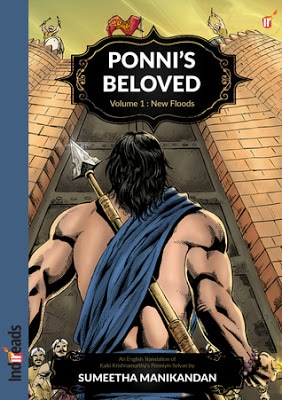
Sumeetha Manikandan, author of Ponni's Beloved, speaks to Sanchita Sen


What makes an epic? Know from the author, who herself took on an epic challenge to translate a classic. Read on to know more

History, intrigue, treachery, secrets, betrayal, love, infatuation, ambition and huge dollops of chivalry, war and humour – an epic is often the amalgamation of all this and more. No epic has a happy ever after… that’s only for fanciful M&B writers I guess. All epics end with a tinge of sadness that makes you want to delve into it again and again.

Sanchita: The reviews of this book has been great! You took on translating an epic! Was it an epic challenge? If yes, what were they?

Sumeetha: It was an epic challenge and it still is because I am still translating volume 4 and there is still one more volume to go before I complete this series. Language, humour, detailed descriptions of life thousand years ago… the project has been replete with challenges.

Sanchita: What according to you are the right requirements for making an epic?

Sumeetha: History, intrigue, treachery, secrets, betrayal, love, infatuation, ambition and huge dollops of chivalry, war and humour – an epic is often the amalgamation of all this and more. No epic has a happy ever after… that’s only for fanciful M&B writers I guess. All epics end with a tinge of sadness that makes you want to delve into it again and again because you would rather live in that period when things were happy and right in the world.

Sanchita: Who is your favorite author and why?

Sumeetha: I have many favourite authors. Kalki Krishnamurthy tops the list among vernacular authors. Followed by Venkatesh Ramakrishnan of Gods, Kings and Slaves fame. I love K.M. Munshi’s books. His series Krishnavatara remains my favourite book of all times, even today. Ken Follet is yet another author who has perfected the art of pulling the reader into an era of his choosing.

Sanchita: What do you think is the need of the hour in the present milieu of storytelling?

Sumeetha: There are many excellent classic novels written in vernacular languages – Tamil, Telugu, Malayalam, Kannada and also Hindi. These need to be translated for a wider audience.

Sanchita: Sneak peek into your next project

Sumeetha: I am working on three different projects. Two are romance novels and one will be a historic fantasy novel. I am a slow writer and I write whenever the mood strikes me amidst the many writing projects that I undertake for my freelance clients. So I guess these will see the light of the day by the end of this year (fingers crossed)

Rapid fire round (First thought that comes to mind on hearing these words)

a.      Classic: Ponniyin Selvan
b.      Translate: Sivagamiyin Sabatham (My next translation project)
c.      Literature: Shakespeare
d.      Heritage: Thiruvalluvar
e.      Eclectic: Keats, Shelly and Byron


About the Author

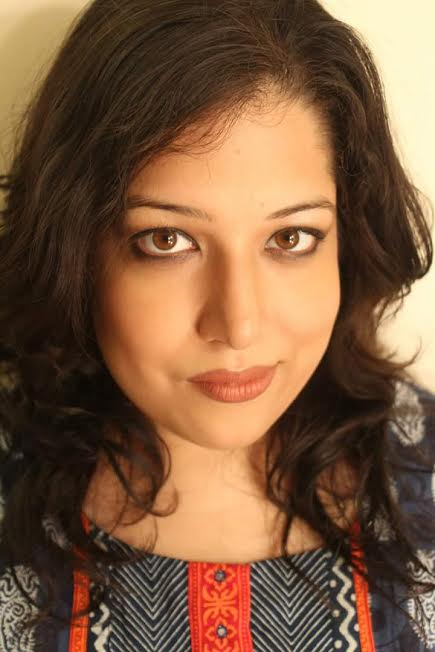
Author Sumeetha Manikandan


Sumeetha Manikandan is a top bestselling romance author whose novellas ‘Perfect Groom’ and ‘These Lines of Mehendi’ (which was published as a paperback novel called ‘Love Again’) have been on the top of Amazon India charts ever since its publication. A bookaholic, thinker, feminist and a daydreamer, she reads across genres and is a crazy fan of history, romance and science fiction novels.

An avid reader of historical novels, she has been translating Kalki Krishnamurthy’s classic Tamil novel Ponniyin Selvan for the past ten years and hopes to translate more of his novels to English.

Sumeetha is married to filmmaker K.S. Manikandan and lives with her nine-year- old daughter in Chennai.

Her book Ponni's Beloved is available at:

Amazon.com                    Amazon.in                    Amazon.co.uk

Vandana Shanker, author of '1857 Dust of Ages', speaks to Sanchita Sen


Writing about the past, sitting in the present is a challenge, but its a mission well accomplished by the author. Read on to know more about this fascinating story, its author and what she has to say about this genre of historical fiction. . .

The greatest challenge is being true to the setting. Creating an atmosphere about which you have only read and therefore have a second-hand knowledge. Additionally, one needs to be careful of the way author’s twenty-first-century sensibilities impinge on the society and culture of the past, especially when creating the characters. I constantly asked myself ‘does the character seem too modern?’ ‘Is she/he true to the culture s/he comes from?’

Sanchita: An intriguing genre, a lovely tale and amazing reviews! That’s what 1857 Dust of Ages is all about. Tell us about how you unearthed this lovely story from the heaps of history? How did you get the idea and how did you go about researching it?

Vandana: Some years ago, while I was doing my research at IIT Delhi, a close friend was pursuing her research on 1857 narratives. As we talked and discussed our work, the interest developed. It brought back numerous stories, tales, Amar Chitra Kathas that I had read in my childhood about the war of 1857. We discovered that there are lots of British writers who have told the story of 1857 – in the nineteenth century as well as the twentieth century. However, the event is practically unexplored from the Indian perspective. There are no contemporary accounts of 1857 and very few fiction writers in India have explored the setting. The British work is interesting but of course, full of stereotypes.  So we often talked about writing a counter-narrative. That is how the idea was born.
I read a lot of novels, British mostly, some diaries, letters, and non-fiction accounts. One of the contemporary writers whose work has left an impression is William Dalrymple. I often returned to White Mughals and The Last Mughal while writing Dust of Ages

Sanchita: Tell us about the challenges of writing in this genre of historical fiction?

Vandana: The greatest challenge is being true to the setting. Creating an atmosphere about which you have only read and therefore have a second-hand knowledge. Additionally, one needs to be careful of the way author’s twenty-first-century sensibilities impinge on the society and culture of the past, especially when creating the characters. I constantly asked myself ‘does the character seem too modern?’ ‘Is she/he true to the culture s/he comes from?’ And often the answer was an honest no. So one has to walk a tightrope between past and present.

Then, of course, the bane of historical fiction, it becomes too lengthy and the little tidbits of information add to the volume of the novel. Editing is a painful process.

Sanchita: Trace your interest in history. Share with us about how you got interested in this subject?

Vandana: More than history, it is the historical fiction that I find fascinating. I believe that it is the best way to know history. Instead of dry numbers, statistics and dates, the stories leave an impact. They humanize history. There is also an aura of romance and nostalgia about bygone times. A good historical fiction always leaves one with bittersweet feelings. These are elements that I love.

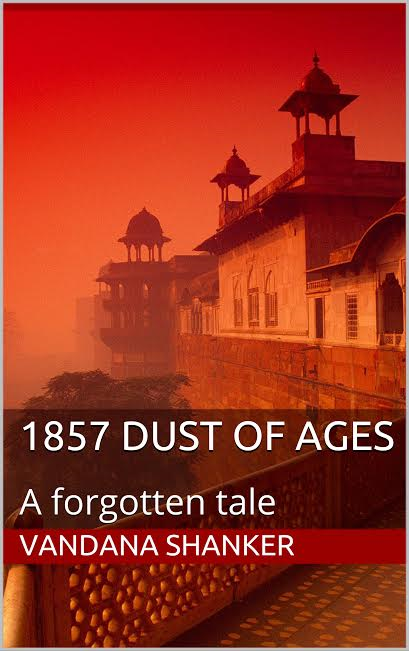
Sanchita: The book cover is enticing, as if it tells a story by itself. What thought went behind it and as an author how important do you think is the book cover, given we tend to say, ‘Don’t judge a book by its cover’.

Vandana: In this case, I wanted to capture the aura of mystery, romance and of course, the very Indian-ness of the setting. I wanted to use some nineteenth-century painting initially, but had trouble finding one that suited the mood of the book. This picture, with its beautiful colour gradient, just fitted the story perfectly.

Despite the warning against judging the book by its cover, I feel that the cover is important. It is like that very important first impression – the first encounter that the reader has with a book. It is meant to capture the attention and at the same time, say something about the content of the book. So it is something every writer should put a lot of thought into.

Sanchita: Sneak peek into your next project.

Vandana: I am currently working on a historical once again, set around 40 years after 1857, moving between Delhi and the Himalayas in the north. It is set against the backdrop of the Great Game. But it is in initial stages.   Hopefully, I will have the first draft ready by the end of the year.

Rapid fire round (First thought that comes to mind on hearing these words)

a.      Fort - Red
b.      Rebel - Cause?
c.      Red - Favourite color
d.      Antique - History
e.      History - Stories


About the Author

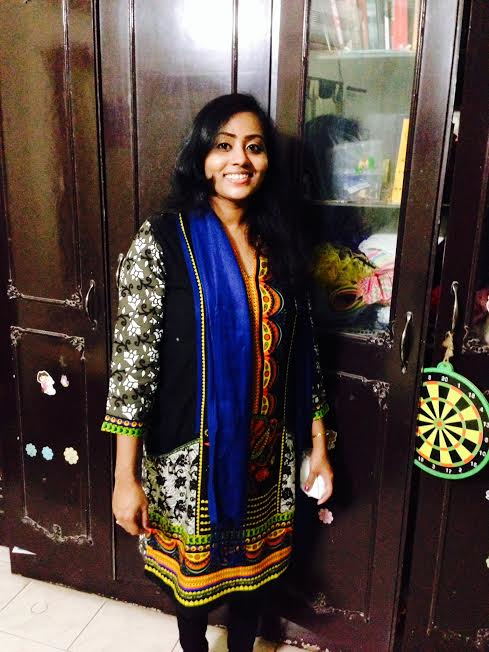
Author Vandana Shanker

Delhi-born Vandana Shanker is the author of the series 1857 Dust of Ages, a historical fiction set in the year of the great uprising in India. A PhD from IIT Delhi, Vandana is passionate about history, storytelling and art. Apart from writing, she teaches literature and creative writing in Malaysia. She has also taught in Universities in India and Vietnam. She currently lives in Kuala Lumpur with her family and wants to travel the world. 

Her book '1857 Dust of Ages' is available at:

Amazon.com                    Amazon.in                    Amazon.co.uk

Anand Suspi, author of 'Half pants full pants', speaks to Sanchita Sen


'Don't judge a book by its cover', they say! But we do judge, because that is the first thing one notices about the book- its cover! Read the author and advertiser's mind to know about the book and what goes into designing its cover. . .

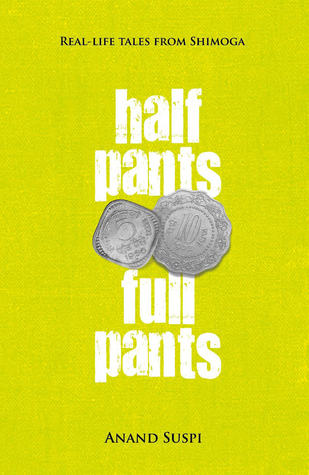
I wanted something that immediately takes the potential reader back to the 70s. The coins do this in the simplest, most evocative manner. They also work as a metaphor for the two sections of the book – Half Pants and Full Pants. The overall look is illustrative of the modest, frugal times we grew up in.

Sanchita: We read about how you started writing a diary on your childhood and then one episode rolled into another and finally got shaped into a book. Do tell us about the trigger that got you nostalgic enough to sit and jot down the travails of innocent childhood?

Anand: The book is an accidental piece of work. One day, about six years ago, I sat down to write a page to convince myself that I could write beyond advertising. I spent an hour thinking of what to write about. Arriving at a topic itself was confusing. I then remembered a few childhood incidents and felt that this was a good starting point and I could easily fill a page or two. I started with one, moved onto another and kept rolling for the next 45 days. It was fun, nostalgia felt cathartic and unintentionally, I had put down a sort of childhood autobiography. The only audience I had in mind was my childhood friends.

Sanchita: The book is being compared to having the same feel as that of ‘Malgudi Days’. According to you, is that true? How does it feel to hear this?

Anand: It feels humbling, but not surprising at all. Balki was the first to read the entire manuscript and he compared it with Malgudi Days. Now that the book is out, a lot of readers have said similar things. It is true to a great extent, by default and not design. The notable difference would be that all the stories in the book are real-life anecdotes. The milieu I grew up in was so similar to the world of Malgudi Days – small South Indian town (Shimoga), middle class parents (dad was a railway guard) and Brahmin upbringing (God and temples, righteousness, academics, respectability etc.) From the setting to conduct to human values, there are a lot of similarities. Between the 1940s and the 1980s, the world hadn’t changed much.

Sanchita: Hailing from the advertising world, you tell us how important is the title and the book cover in ensuring sales of the book? And what thought went into your title and book cover?

Anand: An attractive design is important to catch the eye, especially for a debut novelist. It can be attractive in a thousand ways, but it’s important that the design represents the content. As far as sales are concerned, I don’t think the design will do much if the book does not capture the mind and the heart.

My business partner Harpal, a designer by profession helped me with the cover design. We went through various concepts and finally settled on this. I wanted something that immediately takes the potential reader back to the 70s. The coins do this in the simplest, most evocative manner. They also work as a metaphor for the two sections of the book – Half Pants and Full Pants. The overall look is illustrative of the modest, frugal times we grew up in.

Sanchita: When was the best time of the day for you to sit down and write about those fond memories of childhood that finally went about to become this book?

Anand: I used to write for an hour in the mid-mornings and an hour in the evenings around 7 PM. I would read the day’s work before sleeping.

Sanchita: Sneak peek into your next project.

Anand: Advertising is my livelihood and that takes up a lot of my time. I’ll hopefully get down to my second book in about six months. I have a couple of ideas and they are squabbling with each. The day one scores over the other in my head, I’ll start putting pen to paper. Writing a book (like most creative pursuits) needs a lot of commitment, patience and sustained energy. I hope one of the two ideas gives me all three.

Rapid Fire Round (First thought that comes to your mind on hearing these words)

a.      Innocence - Dogs
b.      Trains - Countryside
c.      Era – No internet and mobile phones
d.      Quaint - Forts
e.      Towns – Contentment


About the Author

Author Anand Suspi

An advertising writer for over 20 years, he started with Mudra, Mumbai in 1995 and subsequently spent a large part of his career in Lowe Lintas working under Balki. He was the Creative Head of Lowe Delhi between 2007 and 2010. Currently, he lives in Gurgaon and is the co-founder of an ad agency called AndAnd Brand Partners.

Half Pants Full Pants is his first book, a sort of childhood autobiography set in Shimoga of the 70s and 80s. Given the era and milieu that he grew up in, it carries a flavor similar to that of Malgudi Days. The notable difference would be that every story is real and the characters are all in their mid-40s now, often reminiscing about the gloriousness of their growing up years.

His book 'Half Pants Full Pants' is available at:

Amazon.com                    Amazon.in                    Amazon.co.uk

Probal Mazumdar, author of 'Key to My Soul', speaks to Sanchita Sen

Author Probal Mazumdar


Authors put there heart and soul into their stories. And how exactly? Read on to know more about this emotional journey and much more:

But finally when Sidd learns about the sacrifice his father had made for him, by even putting his life in danger for his son, the meaning of fatherhood became clear to Sidd. That was a moment of transformation, of learning, of understanding the true nature of human bonds, of values, of family. Articulating these moments within the story got my eyes wet many a times. The emotions ran high within me and so they are very special to me.


Sanchita: As a debutante novelist, what is your take home from the reviews that you are getting for your novel? Also describe to us how exactly did you receive the first feedback of the book after it was published and with how much anticipation were you awaiting it?

Probal: The reviews so far have been quite encouraging. For a first time novelist, reviews are worth
in gold and mean a lot. At this point the appreciations for my book seem to be more than the criticism. I hope the balance does not tilt too much the other way. But the criticisms I have seen are valuable, and I wonder if there were ways to get those before the book release.

Reviews, positive and negative, are points to ponder on. When the book was first released online and in select stores, I was away from home and so had asked the publisher not to mail the author copies to me until I reached home. The first news about the book came to me from an unexpected reader who was my school junior and we had lost touch since we left school. He was one of the first buyers and received the copy of the book even before I could see how it looked. The sense of loss of not being able to feel the book in my hands was immense. I guess my friend could feel my unrest and so he emailed me a picture of my book and said the cover and design looked neat. Within a few days he had sent me an offline feedback and applauded the book. Needless to say, it was a terrific feeling.

Sanchita: Tell us more about the ‘letter from your beloved’ that got you started on this novel?

Probal: In an unusual morning, in 2008, Siddharth (Sidd), a lonely young man, receives a mysterious call from an anonymous caller, about his childhood friend, Hazel. He is told that she is hospitalized in
Jamshedpur, battling for life after a serious accident. Then the caller, urges him to come over urgently. The behest is due to the uncertainty of Hazel’s survival and due to the possession of certain old letters of Hazel the caller wants to give Sidd. Hazel was Sidd’s first love. Someone he is still unable to forget despite 17 years of separation. He ponders what her letters might hold. The letters are the crux of the story. They open up an eclipsed past buried in time that is riddled with dangerous surprises, trauma, twists of fate, sacrifices that exemplify true love and the real reasons for the tragic end of their childhood love story. The letters lead Sidd to Hazel’s past and contains the Key to her Soul.

Sanchita: When is your best time to write and how long did it take you to complete this novel?

Probal: Early mornings are the best time when the mind is free of clutter and fear. And I could manage only three days of that. The rest happened at midnight as that was the only time I managed after my regular office work.

The gap between the first chapter and the second was about 3 years. Yes, it was that long, because I had to travel abroad for work and so the writing went into hibernation. After I resumed writing, three years later, it took me about a year and a half to write it completely.

Sanchita: This novel is your baby and I am sure you love every part of it, but if you were to choose one best scene in the story, which one would that be and why?

Probal: The story revolves around relationships, father-son, mother-daughter, social issues, apart from the core love story. Fathers are often portrayed as heartless and ambitious figures. Their struggles, their silence, their sacrifices often go unnoticed or are taken for granted. But every father has a soft side and maybe even a soft core that the world does not expect them to display. And that is something that bothers me a lot. While writing the father son relationship, I wanted to highlight and bring a sense of closure, in general, on the delicate and often misunderstood relationship between a father and son.

In my novel, Sidd’s father carries weight in his chest for decades thinking that he could have been a better friend and a better father to his son. Remorse for losing his wife early, prevented him from developing a deep bond he wanted to have with his son. The grief carried him away so much that although he loved his son deeply, he could never display that side of him clearly to his son. And that made him feel guilty. But finally when Sidd learns about the sacrifice his father had made for him, by even putting his life in danger for his son, the meaning of fatherhood became clear to Sidd. That was a moment of transformation, of learning, of understanding the true nature of human bonds, of values, of family. Articulating these moments within the story got my eyes wet many a times. The emotions
ran high within me and so they are very special to me.

Sanchita: Sneak peek into your next project.

Probal: I would probably come out with a collection of my poems or my next novel, whichever is ready first.

Rapid Fire Round (The first thought that comes to mind on hearing these words)

a.      Past: Life
b.      Mayhem: my room in college
c.      Memories: childhood romance like the one in Key to My Soul.
d.      Sentiment: Don’t hurt feelings
e.      Death: Why the cycle of life and death?

About the Author

Probal Mazumdar works in an IT company. He is an NIT engineer by societal pressure, singer by accident, guitarist by love at first sound, poet by soul, writer by passion, a world class badminton player in childhood dreams, rebel by day, recluse by night, a samosa in a family of laddoos, a Jughead at the dining table, a shameless and congenital dreamer. Oh! An arsonist too – when his wife is not around, sets his own house on fire with his little son. 

He won the FIRST prize in the All India Poetry Competition, 2014, conducted by PSI (Poetry Society of India). Click on www.indianpoetry.org/awardsgeneral14.htm

His other poems have risen too from cold storage into literary journals like Indian Literature (Sahitya Akademi), Wasafiri (U.K. Vol. 67), Acumen (U.K.), OtherPoetry (U.K.), Chandrabhaga Literary Journal (Editor Jayanta Mahapatra), Dhauli Review, amongst others.

He writes short stories too. This is his first foray into writing a novel.

His book 'Key to My Soul' is available at:

Amazon.com                    Amazon.in                    Amazon.co.uk              

Mayank Sharma, author of 'The Princess of a Whorehouse: The Story of a Swamp Lotus', speaks to Sanchita Sen


Author Mayank Sharma
Know the author's mind and delve deep into the crevices of his heart as he bares it all about his in-depth research for his book treading on a subject that many fear to discuss. Read on to know more:

My heart began sinking to my stomach as I inched closure to their terrifying encounters. Phew! It was a jungle fiercer than Crooked Forest, a terrain severer than Grand Canyon, and a dystopia scarcer than Dead Sea. There were abuses hurled sourer than howl. How could I seize what I saw, felt, and heard, as my glossary ran out of words? I heaved a sigh of relief when I interacted with college students, who worked closely with non-governmental organizations to impart education to underprivileged children. This effort was a major part of my research work.

Sanchita: You couldn’t have chosen a better title for your book, it’s very apt and does justice to the story. Throw some light on the ‘real life events’ that shook you to write this tale.

Mayank: Thanks for the compliment. It is an intriguing title that reflects a poignant storyline. It contains a metaphor to encapsulate the gist of the story in a catch phrase. The title portrays a vivid picture of the protagonist with resilient life skills that provide her the strength to achieve nearly impossible ambitions in spite of being raised in a milieu that is looked upon as a swamp. Ironically, there may be a handful of such cases in real life when the children of sex workers are able to get access to quality education and involve in a dignified occupation. In one such case, I came across a heart-breaking struggle of the daughter of a former sex worker. When she was young, her mother was trafficked to Mumbai’s red light district. In a Facebook post, she shared her journey of becoming a theatre artist in Mumbai. She candidly talked about discriminations and hardships she encountered throughout her education. Her determination and courage inspired me to pen down this tale. Though, that girl in real life was not as blessed as my protagonist in the story.

Sanchita: While writing the book, which aspect of it needed the maximum amount of research and why?

Mayank: Encountering a writer's block at various stages was an inevitable thing for a naïve writer like me while I was writing the story with a female protagonist, especially based on a thin-skinned theme like forced prostitution. It was quite difficult for me to visualize in my mind the sentiments of a woman when a fiasco rips her dignity and turns her hope into disgrace. Eventually, my willingness to empathize struggles of a woman in the lurch enabled me to create unique identities of my characters. I had worn hats of similar individuals, who resembled closely to my characters and had gone through similar life experiences. Doing so was not possible for me without having interacted with those individuals, who suffered the same twinge in real life.

In due course, it turned out to be a mammoth challenge for me as I began probing the lives of sex workers and their children. I read about several inhumane incidents of human trafficking in which the greediness to make a couple of bucks eclipsed trust and humanity. While I was writing, I wanted to feel and empathize their encounters so that I could mirror their agonies in my story. My heart began sinking to my stomach as I inched closure to their terrifying encounters. Phew! It was a jungle fiercer than Crooked Forest, a terrain severer than Grand Canyon, and a dystopia scarcer than Dead Sea. There were abuses hurled sourer than howl. How could I seize what I saw, felt, and heard, as my glossary ran out of words? I heaved a sigh of relief when I interacted with college students, who worked closely with non-governmental organizations to impart education to underprivileged children. This effort was a major part of my research work. When I made it a goal to bring their distressed voices to a larger audience, it became a tricky bargain to delimit the breadth and depth of encounters that were suitable for a debut book. My idea was to write the content shedding light on the fact that a sunny morning always follows the thunderstorm. A plot in a simple narration took precedence over literary aspects as I believe that solemn messages are best delivered in a direct language with no digressions. Personally, I also believe in letting creativity and freedom of expressions flow naturally, without being shackled by the laws of literary realm. The selection of right dialogs to closely mimic the gibberish in Hindi, commonly used in that locale was another challenge that needed some study. Then, I looked at some novels based on urban fiction or street lit, a genre that focuses on socio-economic discriminations in urban settings and is quite popular among African Americans. The dialogs commonly used in urban fiction were not new to me having lived in Atlanta. I am not sure if I should call my book’s style as Indian urban fiction. Well, you cannot expect everything to be hunky-dory. Perhaps, this style is vulnerable to a pushback in the mainstream. Anyway, I feel victorious when my readers do not stumble upon the dilemma of putting the book down halfway.

Sanchita: How do you think writing can trigger the winds of change?

Mayank: The flapping of the wings of a tiny butterfly in Delhi can possibly trigger a tornado in Dhaka. Even a tiny cause can initiate a ripple effect that can lead to a large-scale transformation. I have used this analogy to describe the Butterfly Effect. In a nutshell, writing with a strong purpose in mind can transform a writer’s pen into the mightiest tool, capable of sparking a revolution. I consider writers as thought leaders, who have the ability to influence their readers to embrace a change. Having said that, not every story can become a catalyst of change, unless it has a distinct take away for readers when they put down the book at the end.

Over several decades, African American writers have been sharing their life experiences, the hardships of street life, and the breach of civil rights, in their novels based on urban lit. Iceberg Slim, whose autobiography, ‘Pimp: The Story of My Life’ was published in 1967. More than two million copies of this novel were sold worldwide. In the same year, his novel, ‘Trick Baby’ was released and it was adapted into a movie by Universal Pictures. His books had a huge influence on African-American community and hip-hop musicians. Some terms used in his books were included into the lexicon of Black English. Urban lit has its critics in the mainstream, and so it was kept on the backburner until a new wave gained momentum in late 90’s, when publishers recognized the real potential of African-American readership. The genre caught momentum only when the readership was able to connect to their own issues.

Sanchita: Who is your favourite author and why?

Mayank: Paulo Coelho is my favorite author since you asked for only one author. I like his novels’ philosophy. Additionally, I am an admirer of Arundhati Roy and Amartya Sen.

Sanchita: Sneak peek into your next project?

Mayank: My next project is a story of an eternal love of two soulmates, who are miles apart by nationalities, poles apart by faith, yet their shared journey of self-discovery interweaves at the crossroads of archeology, technology, and philosophy.

Here is an excerpt - “I thought the depths of ocean and the outer reaches of space were only two uncharted territories until I began to discover the furthest depths of my soul.”

Stay tuned…

About the Author

Mayank Sharma is a computer engineering graduate with post-graduation in business management. He works with a leading technology multinational in Delhi. He has authored a number of articles and white papers on software technology and processes. For the first time in April 2014, his article was featured in Better Software magazine published in Florida, USA. Writing has become Mayank's greatest passion when he observed how it can trigger the winds of change. He is gradually transforming from a “left-brained” writer to a “right-brained” writer. Besides writing, he is passionate about sketching, painting, and making sculptures since childhood.

India is the fifth-largest economy in the world with the Gross Domestic Product growth at 7.1 percent. Contrary, India ranks 118 out of 157 countries in the happiness index. The fact seized Mayank’s attention towards social problems affecting social support, freedom of choices, and generosity, to name a few. Having travelled across continents and associated with people with diverse beliefs and values, he became more curious about the social riddles curtailing liberties across societies. He penned his debut novel, The Princess of a Whorehouse, when he came across some real life incidents that quivered his soul.

His book 'The Princess of a Whorehouse: The Story of a Swamp Lotus' is available at:

Amazon.com                    Amazon.in                    Amazon.co.uk

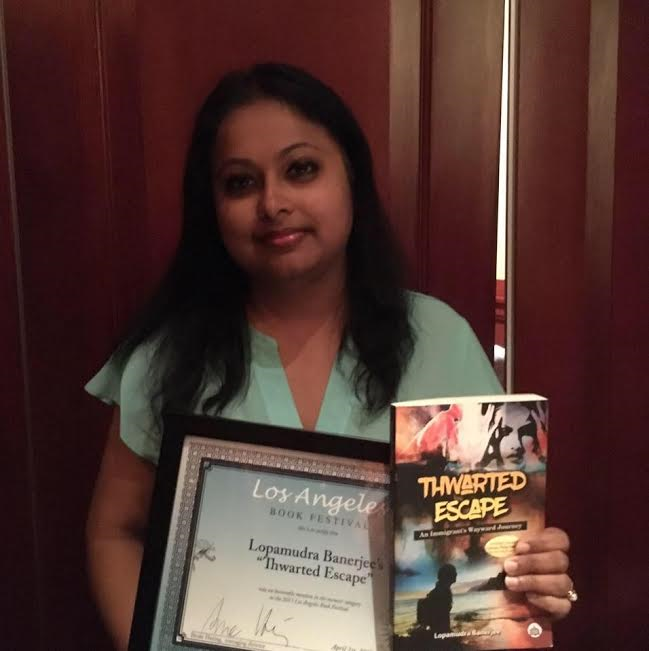
Lopamudra Banerjee, author of 'Thwarted Escape: An Immigrant's Wayward Journey' speaks to A.K. Nanda

Author Lopamudra Banerjee

‘Thwarted Escape: An Immigrant’s Wayward Journey’, the debut memoir/ nonfiction novel by Lopamudra Banerjee (published by Authorspress, in October 2016) has recently received Honorary Mention at the Los Angeles Book Festival, 2017. A Journey Awards 2014 recipient, hosted by Chanticleer Reviews, the book which first took shape at the University of Nebraska at Omaha’s Creative Nonfiction program, is best described as the author’s subtle, complex and organic journey, where she evolves from a small-town girl in India to a woman, reconnecting with her ancestral home, her emotionally fraught childhood and puberty, all the while looking for the meaning and essence of ‘home’. In conversation with the author, ace editor and scholar Mr. A.K. Nanda discusses her journey of writing and publishing the book, while delving into its theme, style, genre and other relevant areas.

A.K. Nanda: Hello Lopa. Congratulations on the publication of your book ‘Thwarted Escape’. When did you begin conceptualizing the book? Did you plan out the entire flow at the outset and then set about assimilating the pieces? Or did it develop brick by brick as you went along with its creation?

Lopamudra: In the preface of my book ‘Thwarted Escape’, I write: “Eight years ago, during an early fall afternoon, I was walking past the trees and green shrubs that stood between concrete buildings and their closely bolted doors, smelling the air, sand and soil of a graduate school that I had just stepped into. I had migrated with my husband to a part of Midwestern America which we had not seen or heard of until we decided to move there almost three years back. That very day, my pregnant mind was wandering, with the Midwestern winds and the dry, sweltering September heat, into the world of memories, crushed, brittle, yet resurfacing from unexpected nooks of my consciousness. It was in the crowded writing lab inside the bolted doors of one of those buildings that the seed of this book was sown.” This brief introduction kind of summarizes my complex and organic journey with the book. I did develop the book brick by brick, or word by word, as I went along this arduous, yet gratifying journey. I started out when I was in the third trimester of my first pregnancy, as it was then that the idea of carving a memoir in a letter form addressed to my unborn daughter struck me, spurred on by Dr. Lisa Knopp, my mentor of Creative Nonfiction at the University of Nebraska at Omaha. After my two daughters were born, and I went back and forth between traveling to India and the US, the idea of writing a diaspora and migration story reared its head stronger every day, and I trusted my instincts and plunged into it head-on.  As I have said in another interview too, initially there was no book, but only a number of disjointed narratives/personal essays where my pent up, calcified memories wreaked havoc in my mind. The book took shape when I realized that all of them could come together and take a novel-like curve. I am indebted to my mentors and my writing circle friends who have seen merit in the manuscript and inspired me to share my story with the world.

A.K. Nanda: What inspired you to write this book which made you unload many things that are intensely personal?

Lopamudra: During my tenure as a part time writer pursuing masters’ degree in English in the US with emphasis in Creative nonfiction, I came across this wonderful book, ‘Tell It Slant’, edited by Brenda Miller and Suzanne Paola, which had opened up whole new vistas of writing about one’s own self, while situating oneself at the core of his/her family, the microcosm, and the world, the greater window. Coming across the memoirs and essays of authors like Joan Didion, Jamaica Kincaid, Maya Angelou, Maxime Hong Kingston, Naomi Shihab Shye and Alice Walker, I was introduced to a treasure trove of their complex, intricate and mind-blowing emotional experiences where these women have bared it all, with élan, their volatile inner cosmos and their struggles within their society, culture, families, and within their own selves. While these women authors have cumulatively been my principal inspiration, I also was fascinated by this definition of a memoir by William Zinsser: “Good memoirs are a careful act of construction…memoir writers must manufacture a text, imposing narrative order on a jumble of half-remembered events.” In my case, while in the process of writing ‘Thwarted Escape’, I was seeking my own catharsis for varied reasons, I also was looking into ways that would make my own truthful stories about girlhood, womanhood, motherhood and my immigrant narratives resonate with the readers to illuminate their own lives and perceptions. And while starting with this ‘jumble of half-remembered events’, I did bare my soul and chisel myself as a narrator depicting some of the most excruciating, exhaustive and even some life-changing moments and
epiphanies in the book.  And yes, I did it, while situating myself at the core of my ‘home’, ‘family’, and the various particulars of my emotional landscape, which thankfully, have enabled me to give the narrative a perspective that perhaps would not have been possible if I had written an entirely fictional narrative. 

A.K. Nanda: You took two long years to contemplate leaving your home and parents for good but found yourself longing to return to the chaos and bickering of your parents’ home. How would you explain the absurdities of a Bengali household becoming so attractive?

Lopamudra: In an in-depth, analytic review of ‘Thwarted Escape’, published in Learning & Creativity e-mag, Shabir Ahmed Mir has reflected on the subtle, organic forces that are at work in the book in a very intriguing way. “Like all first-generation immigrants, she is torn between two worlds. There is always a nagging implicit guilt about a new world usurping her original ‘Home’: in reality and in memory. There is a subtle interplay and tension between these two identities: the Woman identity is the centrifugal one, pulling her away from her home and her society because that is the only way of breaking free from it; the Immigrant identity is the centripetal one that calls across the seas to her to come back to her filial obligations and ties, to the joy and love of her city.” He points out, very aptly. When I revisit my hometown and my childhood home, I return not only to the chaos and bickering, but also to filial ties and to my own volatile self strung like a marionette to those ties, to the passionate fervor and nostalgia of those pent up, calcified memories. Yes, it is a complex journey, after all.

A.K. Nanada: An immigrant is not a natural citizen of the country where he/she lives. Does it make any impact on you that you do not belong to the country you live?

Lopamudra: I do really find myself in a conscious as well as unconscious limbo every time I journey back and forth between my hometown Barrackpore, Kolkata and the various cities in the US in which I have had my moorings, Buffalo, Omaha and now Dallas, striving to strike roots in each of my adopted homes I have embraced. Hence the thought of writing this diaspora and migration story/memoir in which I seek the essence and meaning of ‘home’ and also my self- identity as a woman, a mother and a daughter, living ten thousand miles away from her Bengali hometown in the outskirts of Kolkata.

A.K. Nanda: To whom you are born is as important as where you are born – the climate, the culture, the pattern of living, the flora and fauna, etc. Do you think it is true?

Lopamudra: Yes, the filial ties, the family and the roots of an individual is without any doubt, an integral part of an individual’s persona. As for myself, it is unimaginable to think of my own existence without thinking of the elemental chaos, the sights, smells and sounds of the streets of my hometown, the quirky humor and idiosyncrasies of my parents, relatives, neighbors and my family, the river Ganges that flows at the heart of my hometown Barrackpore, the rickshaw puller that takes me back from the ‘ghat’ (banks) of the river to my parents’ home. All these and much more form an integral part of the narrative of my book, while all the time haunted by the nostalgia and the tyranny of memory even as I trudge along the manicured by lanes of my adopted home in the US.

A.K. Nanda: Does it occur to you that your remembering and returning time and again to your roots
despite everything – there is something you cannot run away from?

Lopamudra: Well, that, to me, is the basic premise behind writing this book, in the first place. ‘Thwarted Escape’, the name of my book is born out of the conscious yet subtle interplay of tension between moving away and returning, as I touch upon the metaphor of home and the act of subconsciously embracing the physical and emotional landscape of our birthplace, however much we evade it. It is also about a woman’s self-chosen exile in the US, the back story behind that exile and also the sense of oscillation that she feels in both the worlds. The moment she thinks she has assimilated in her adopted home, she disintegrates, in nostalgia and pain. When she revisits her hometown time and again, she realizes her volatile, passionate ongoing journey with her roots and the fact that she has not been able to break free from it at all.

A.K. Nanda: Your excellent use of imagery could have gone well in a long poem, describing your wayward journey rather than in a dry prose. Is there any special reason of choosing monologue prose form? Don’t you think a lot of lyrical charm of this wayward journey that could have been achieved in a poetry form sort of meanders away in prose?

Lopamudra: Well, if you have read the entire book, it is neatly divided into four sections;  on childhood, womanhood, motherhood, and the intersection between life and death, and apart from monologue prose form, for which my chief inspiration is the stream-of- consciousness way of storytelling, I do employ a lot of other literary devices, like double narrative (inspired by Natalie Sarraute’s autobiographical essays), adding real-life dialogues, letters which reflect some metaphorical truths I wanted to convey through the narrative journey, and also the literary journalism style of presenting some montages and memorabilia (as in the chapters ‘To Ravaged Nymphs’ and ‘Writing the Woman’s Life’). The narrator of the book is none other than my own alter-ego. It would have been nearly impossible for me to depict these complex nuances in a single long poem, and also, if I would have chosen a fictional narrative to represent it all, the emotions would not have been as raw, as palpable as it is in its nonfictional form. But yes, for the poetic prose, I am indebted to my reading of Sylvia Plath, Kamala Das, Katherine Mansfield, Virginia Woolf, and even, the contemporary essayists/novelists Annie Dillards, Naomi Shoaib Shye as these phenomenal women have taught me the value and essence of a ruminative, emotional journey, unfolding the deep, dark chambers of their souls. I hope thus, I have been able to engage the readers.

A.K. Nanda: Do you think it is possible to have the taste of freedom amid countless bondages?

Lopamudra: I would like to quote Virginia Woolf in answer to this: “There is no gate, no lock, no bolt that you can set upon the freedom of my mind.” I have answered it in various layers, I guess, in the chapter ‘Writing The Woman’s Life’, and also in some other chapters where I reflect on what it means to be tied to the patriarchal society, culture, family, and what it means to break free of it, which has its very own nuances as well.

A.K. Nanda: Happiness is a state of mind, irrespective of what you are and where you are. When you live with integrity, your heart begins to fill with happiness as vast as the universe. Do you agree with this view?

Lopamudra: Dr. Seuss had once famously said: “Don't cry because it's over, smile because it happened.” As for my self-identity as a writer, I find the richest fiber of my soul when I look at my life, its crests and ridges, bumps and bolts enriched by the touchstone of love. Love that is profound and inexplicable, whether in human or familial ties, or love that is manifested in the way I embrace nature, gives me the impetus to live with integrity, and happiness stems from love.

A.K. Nanda: Fiction or biographies or even research-oriented books probably find buyers more easily that personal memoirs. What has been the reception to your book in your native country and your adopted country?

Lopamudra: Contrary to the clichéd assumptions, I would very much like to mention that memoirs, personal narratives or collections of personal essays have always found their niche, discerning audience and that precious books like ‘The Narrative of Frederick Douglas’, ‘I know Why The Caged Bird Sings’ by Maya Angelou, ‘Notes of a Native Son’ by James Baldwin, ‘The Year of Magical Thinking’ by Joan Didion, ‘Night’ by Elie Wiesel and also the personal essays of Virginia Woolf, including ‘A Room of One’s Own’ have earned their rightful places as classics in the estate of literature. Critically acclaimed international authors of the Indian Diaspora like Bharati Mukherjee, Pico Iyer, Bhanu Kapil Ryder have written and published personal narratives/essays. In recent times, we have seen the phenomenal success of Saroo Brierly’s memoir ‘A Long Way Home’, adapted as the award-winning film ‘Lion'. And there are many other instances, like The Motorcycle Diaries (based on The Motorcycle Diaries: Notes on a Latin American Journey by Che Guevara), Nick Flynn’s great memoir ‘Another Bullshit Night in Suck City’, ‘This Boy’s Life’ by Tobias Wolff, ‘The Diving Bell and the Butterfly’ (based on Jean-Dominique Bauby’s memoir), and the list goes on. So I would always say that rather than believing in water-tight genres and sub-genres fed by the publishing industry, and rather than focusing only on them, it should be the aim of every writer worth his/her salt to know his/her inner voice, to strive to carve it the best way possible, with honest, impactful storytelling. As a matter-of- fact, a memoir can very much be read as a 1st person narrative fiction, and a novel exploring the metaphorical truth of a character/characters can have autobiographical elements in it. What matters at the end is the journey that transpires in its pages.

As for ‘Thwarted Escape’, though I must admit it had been hard to find a publisher for it in the beginning, following its publication, the response has really been appreciative. The book has recently been placed as an Honorable Mention at the Los Angeles Book Festival 2017 (category: memoir/autobiography), and in 2014, the manuscript had been a Journey Awards recipient, hosted by Chanticleer Reviews and Media. Several renowned literary journals and magazines have featured the book, including the Setu International bilingual e-mag, Café Dissensus (New York-based journal), Different Truths e-zine, Women’s Web, and South Asian Times of Australia. Several readers have reviewed the book very positively in Amazon, Goodreads and Facebook, and have personally messaged me to say how they have been inspired by my autobiographical narratives. What more can I ask for my debut baby in paperback? I am truly thankful for the response it has garnered back at home and in the US, within five months of its release.

A.K. Nanda: What are you working on next?

Lopamudra: At the moment, there are several writing and editing projects in the pipeline, those are very close to my heart. Poetry is my life-blood, and my literary blog consists of more than 100 poems, out of which many are published in journals and anthologies both in India and in the US. I am currently working on editing my first solo poetry collection and also another work-in- progress is a short story collection, which I aim to publish sometime in 2017. I am also working on several other literary translations (Bengali to English), and also on the English translation of a very contemporary project, based on three actresses’ lives in modern day Mumbai. Also, my second book as a co-editor, a collection of spine-chilling eerie stories is in its final editing stage, and might see the light of the day soon.


About the Author

Lopamudra Banerjee is a writer, poet, editor and translator, currently based in Dallas, USA. She has a Masters’ degree with thesis in creative nonfiction writing from the Department of English, University of Nebraska at Omaha. She is the co-editor of the bestselling anthology on women, Defiant Dreams: Tales of Everyday Divas, published in collaboration with Readomania and Incredible Women of India. Thwarted Escape: An Immigrant's Wayward Journey, her debut memoir/nonfiction novel, published by Authorspress, has recently received Honorable Mention at the Los Angeles Book Festival 2017. The manuscript has also been a First Place Category Winner at the Journey Awards 2014 hosted by Chanticleer Reviews and Media LLC. Her literary works have appeared in numerous journals and anthologies, both in India and the US. Her poetry has been published in The Significant Anthology, Umbilical Chords: An Anthology on Parents Remembered, Kaafiyaana, and her fiction is forthcoming in Silhouette I and II anthology, to be published by Authorspress. She has received the Reuel International Award 2016 (category: Translation) for her English translation of Rabindranath Tagore's novella Nastanirh (translated as The Broken Home) instituted by The Significant League, a renowned literature group in Facebook, and the book is available in Amazon Kindle.


Udai Yadla, author of 'A walk in the Rain', speaks to Sanchita Sen

Author Udai Yadla
An engineer by profession, a writer by passion and a romantic at heart. Read on to know more about this author and his debut novel.

‘A walk in the rain’ is not just a love story. It’s a story of life. It’s a story of how sometimes life can treat you in unfair way. It’s a story of how love can help you deal with life.

Sanchita: How did story writing happen to you? When and why did you feel that this was your calling and that this was a story you needed to tell?

Udai: Writing has always been on my mind. I had been into writing in various forms. But I always wanted to tell my story to the world. For me, the most intriguing and interesting subject is love. I wanted to explore the resilience of love in the face of adversities.

Sanchita: A beautiful title ‘A walk in the rain’ gives an impression of a romantic love story. Are you a romantic at heart?

Udai: Of course I am. I believe that every happy person is romantic at heart.

Sanchita: When love stories are the order of the day, what do you think makes ‘A walk in the rain’ stand out?

Udai: ‘A walk in the rain’ is not just a love story. It’s a story of life. It’s a story of how sometimes life can treat you in unfair way. It’s a story of how love can help you deal with life.

Sanchita: As a debutante author, what do you think are the challenges that you face while writing your first book?

Udai: Structuring of work was the primary challenge that I faced. But the kind of job I do helped me in structuring my work.

Sanchita: Sneak peek into your next project?

Udai: My next project is a psychological thriller. It’s a gripping tale that can give you shivers and goosebumps at the same time.

Rapid Fire Round (The first thought that comes to mind on hearing these words)

a. Redemption: Saloni
b. Rain: Love
c. Lovelorn: Sunny
d. Journey: Destiny
e. Words: Translator of your thoughts


About the Author


Udai Yadla is a passionate author and poet. Mechanical engineer by education, Software engineer by profession, Writer by passion. Owing to his job, he travelled to various cities, socializing with people of different cultures. He cultivated interest in learning more about people, which perhaps enticed him into the study of human psychology. His interest in psychology is evident in his writings. His first book 'A walk in the rain' is widely appreciated equally by critics and peers. He has been nominated for Forbes India Celebrity 100 List. He is the most sought after author among young breed of authors. He is currently working on his next novel, which is a psychological thriller.

His book 'A walk in the Rain' is available at:

Amazon.com                    Amazon.in                    Amazon.co.uk


Booklure Promotions Blog Design by Ipietoon